Nuclear Reactors and SMRS for Energy Production
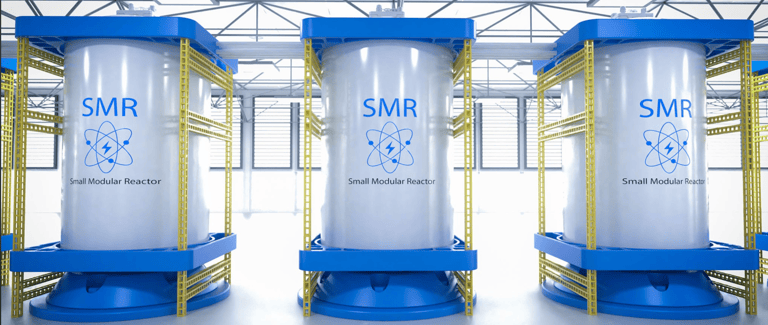
The future of nuclear energy is no longer about monolithic concrete domes; it's about Small Modular Reactors (SMRs) that are compact enough to be built in factories and shipped to their destination. These reactors typically produce under 300 megawatts, making them far more flexible than traditional gigawatt-scale plants.
5/19/2026
The future of nuclear energy is no longer about monolithic concrete domes; it's about Small Modular Reactors (SMRs) that are compact enough to be built in factories and shipped to their destination. These reactors typically produce under 300 megawatts, making them far more flexible than traditional gigawatt-scale plants. By mass-producing these units in controlled settings, we can significantly lower the financial risks and long construction timelines that have historically plagued the nuclear industry.
A major shift in these new designs is the move toward "passive safety" systems. Unlike older reactors that require active pumps and human intervention to cool the core during an emergency, SMRs are designed to use natural laws like gravity and convection. If a problem occurs, the physics of the reactor itself causes it to shut down and cool naturally, virtually eliminating the risk of a meltdown. This allows these plants to be built closer to population centers or industrial hubs that need reliable, carbon-free power.
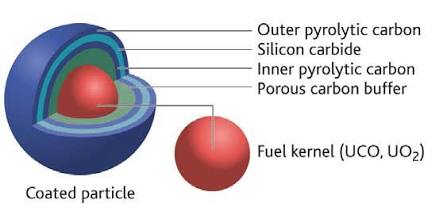
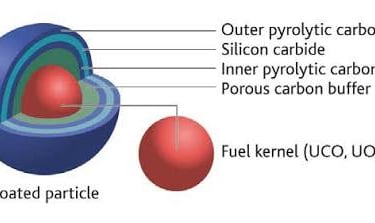
The secret to this enhanced safety lies in the fuel itself, specifically TRISO (Tristructural Isotropic) particles. Each tiny kernel of uranium is encapsulated in multiple layers of carbon and silicon carbide ceramic. This microscopic "containment vessel" is incredibly robust, able to withstand temperatures up to 1,600°C without breaking. Because the ceramic coating retains all radioactive fission products within the grain, the fuel is essentially meltdown-proof, even in extreme conditions where coolant is lost.
Environmentally, these reactors offer a path to deep decarbonization beyond just the electricity grid. The high-temperature heat produced by SMRs can be used directly for industrial processes—like hydrogen production or steel manufacturing—that currently rely on burning natural gas. By combining smaller footprints, inherently safe ceramic fuels, and factory-scale efficiency, this new generation of nuclear energy provides a scalable, 24/7 partner to wind and solar power.